
1. Bitcoin market
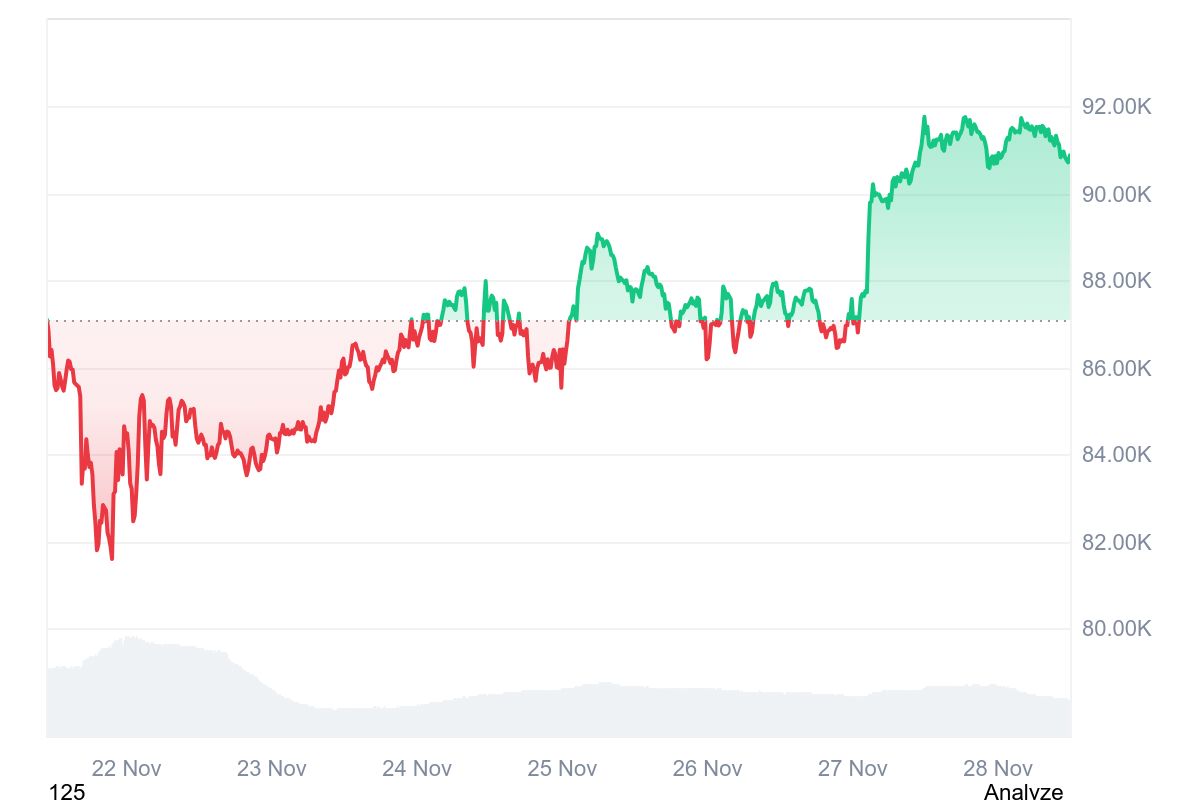
Bitcoin Price Trend (2025/11/22 - 2025/11/28)
At this stage, the overall performance of Bitcoin is "bottoming out → repairing at a low level → oscillating and rebounding → breaking through and reversing → stabilizing at key resistance levels". The price range has been rebounding since the low point of about $81,000 on the 22nd. On the 27th, there was a key reversal, and the trend showed a significant acceleration. The price quickly rose from around $88,000 and successfully broke through the resistance level of $90,000 that had not been stabilized for many days, reaching the range of $91,000-$ 92,000 on the 28th. The market sentiment has moderately improved from extreme panic, but the funding situation is still cautious, and the rebound is mainly driven by oversold repair and short covering.
Deep dip bottom stage (November 22)
On the 22nd, Bitcoin continued its cliff-like downward trend from the previous day. It opened lower and quickly broke through key price levels such as $85,000 and $83,000 in a short period of time. Then it further fell to the lowest point of this stage, around $81,000. The entire trend showed a sharp waterfall-like decline, and the market panic reached its peak this month. Although there was a slight rebound before the close, the overall situation was still in a deep oversold state, with huge fluctuations throughout the day, indicating extreme capital contraction and a sharp decrease in liquidity supply.
Cause of trend:
1.The large-scale leverage liquidation accumulated in the previous few days of continuous decline erupted on the 22nd, causing a rapid decline.2.The panic index remains at an extreme level, and the market's short-term risk perception of encrypted assets continues to deteriorate.3.Bullish liquidity dried up, selling pressure dominated the market, causing prices to quickly break through multiple supports.
Low-level repair phase (November 23)
After a sharp bottoming out on the 22nd, the market stabilized significantly on the 23rd. The price gradually rose from the $81,000-$ 82,000 area and did not break through it after multiple tests, indicating that short-term selling pressure began to dry up. The rebound strengthened in the afternoon, reaching a high of around $85,000, and fluctuated narrowly within this range. The performance throughout the day showed that although the bullish force was weak, the market entered a "technical repair + wait-and-see buffer" stage, and the downward trend slowed down significantly.
Cause of trend:
1.Low-bottom fishing funds and short covering jointly promote price repair.2.Market panic has cooled down, and sentiment has slightly rebounded from extreme fear.3.Technical oversold leads to short-term funds rushing to rebound.
Volatile recovery phase (November 24-25)
November 24
On the 24th, the overall rebound rhythm continued, and Bitcoin fluctuated upward in the range of $84,000-$ 86,000. In the afternoon, it further rose to $87,000, but the selling pressure above was still obvious, and the rebound rhythm was relatively mild. Funds showed a trend of "trying to buy on dips", and the market gradually got rid of the dominance of panic selling.
November 25
On the early part of the 25th, the price attempted to break through $89,000 and briefly touched near $90,000 during the day, but the resistance at this integer level was strong. After failing to rise, Bitcoin fell back to the $87,000 area for consolidation, and the rise and suppression were still very obvious throughout the day. Although the price continued to rise, the overall trend is still in the "repair window" and the trend reversal has not yet been confirmed.
Cause of trend:
1.The rebound momentum has entered the verification phase, and the bulls and bears have formed a clear tug-of-war at $90,000.2.Although the market has stabilized, fear still dominates, and there is a lack of long-term funds to drive breakthroughs.3.$90,000 is a dual resistance level for technology and psychology, with obvious resistance.
Breakthrough and reversal phase (November 26-27)
November 26
On the 26th, Bitcoin continued to maintain a narrow range of oscillation between $86,000 and $88,000. This range showed a clear pattern of "raising the bottom", and the bulls began to gradually occupy the short-term advantage. However, the overall trading volume is still limited, and the market has not yet shown a decisive breakthrough action.
November 27th, Key Reversal
On the 27th, there was a significant acceleration in the trend, and the price quickly rose from around $88,000, successfully breaking through the resistance level of $90,000 that had not been stable for many days. After the breakthrough, the momentum significantly increased, reaching the highest point in the range of $91,500-92,000. This is the first strong structure of "obvious breakthrough + high-level acceptance" since this round of big decline.
Cause of trend:
1.The concentrated triggering of short covering has pushed the price up rapidly.2.Technical breakthroughs attract short-term bulls and quantitative trading.3.The market as a whole is transitioning from extreme panic to a cautious recovery phase, with a marginal improvement in pessimistic sentiment.
Resistance level stabilization phase (November 28)
On the 28th, Bitcoin maintained a high-level oscillation in the range of $91,000-$ 92,000, and the overall market stabilized. Although there was a slight pullback, the lows did not fall below the previous day's breakthrough level, but remained firmly above $91,000. This indicates that the market's resilience is still strong. The overall performance is a natural consolidation after the breakthrough, and the market atmosphere is significantly more stable than the previous week.
Cause of trend:
1.The inertia buying pressure after the breakthrough the previous day continued to support.2.The bears are unwilling to continue to expand their exposure after the breakthrough, and the market enters a relatively balanced state.3.Some investors expect a "temporary bottom" to form in the short term, and their risk appetite has slightly increased.
2. Market dynamics and macro background
Capital flows
1. ETF fund dynamics
Bitcoin ETF fund flow this week:
November 21: + 238.40 million USD
November 24: - $151 million
November 25: + 128.70 million USD
November 26: + 21.10 million USD

ETF inflow/outflow data picture
On November 21st, the total net inflow of Bitcoin spot ETF was about + 238.40 million US dollars. Against the background of continuous outflows for many days, funds once significantly flowed back. However, on November 24th, there was a brief transition to a net outflow of 151 million US dollars. Prior to this, on November 19th, BlackRock IBIT recorded a record outflow of 523 million US dollars in a single day, and the overall net redemption of the US stock Bitcoin ETF throughout the week, institutional sentiment still leans towards defense. On November 25th and 26th, funds resumed a small net inflow, and low-level buying began to re-enter the ETF channel. The fund structure gradually shifted from "one-sided outflow" to "alternating outflow and inflow", but the overall situation is still in a volatile game stage.
According to Farside Investors' BTC-ETF Flow tracking data, this initial outflow followed by a small rebound reflects the possibility of a structural reversal in the market near the bottom. It is worth noting that despite the inflow of funds, the overall inflow is still far from covering the cumulative outflow of hundreds of millions of dollars, and market liquidity is still tight. Overall, the logic of ETF funds this week is reflected as follows: after strong redemptions in early to mid-November, the ETF appeared tentative rebound on November 25th, marking the cautious entry of institutions into the current low-price zone, which may pave the way for mid-term bottoming, but it still needs to be observed whether funds can continue to flow in the short term.
According to Cointelegraph, BlackRock spot Bitcoin ETF IBIT holders have returned to profitability after Bitcoin rebounded above $90,000, indicating that the sentiment of one of the key investor groups driving market development this year may be changing. Arkham data shows that the cumulative profit of holders of the largest spot Bitcoin fund, BlackRock IBIT, has rebounded to $3.20 billion. Arkham said, "BlackRock IBIT and ETHA holders made a total profit of almost $40 billion at their profit and loss peak on October 7th, but fell to $630 million four days ago. This means that the average cost of all IBIT purchases is almost the same." With ETF holders no longer under pressure, the selling speed of Bitcoin ETFs may continue to slow down. Since the net outflow of 903 million USD recorded on November 20th, the situation has significantly improved.
2. Bitcoin ETFs Record Net Outflow, Spot Markets Under Significant Pressure
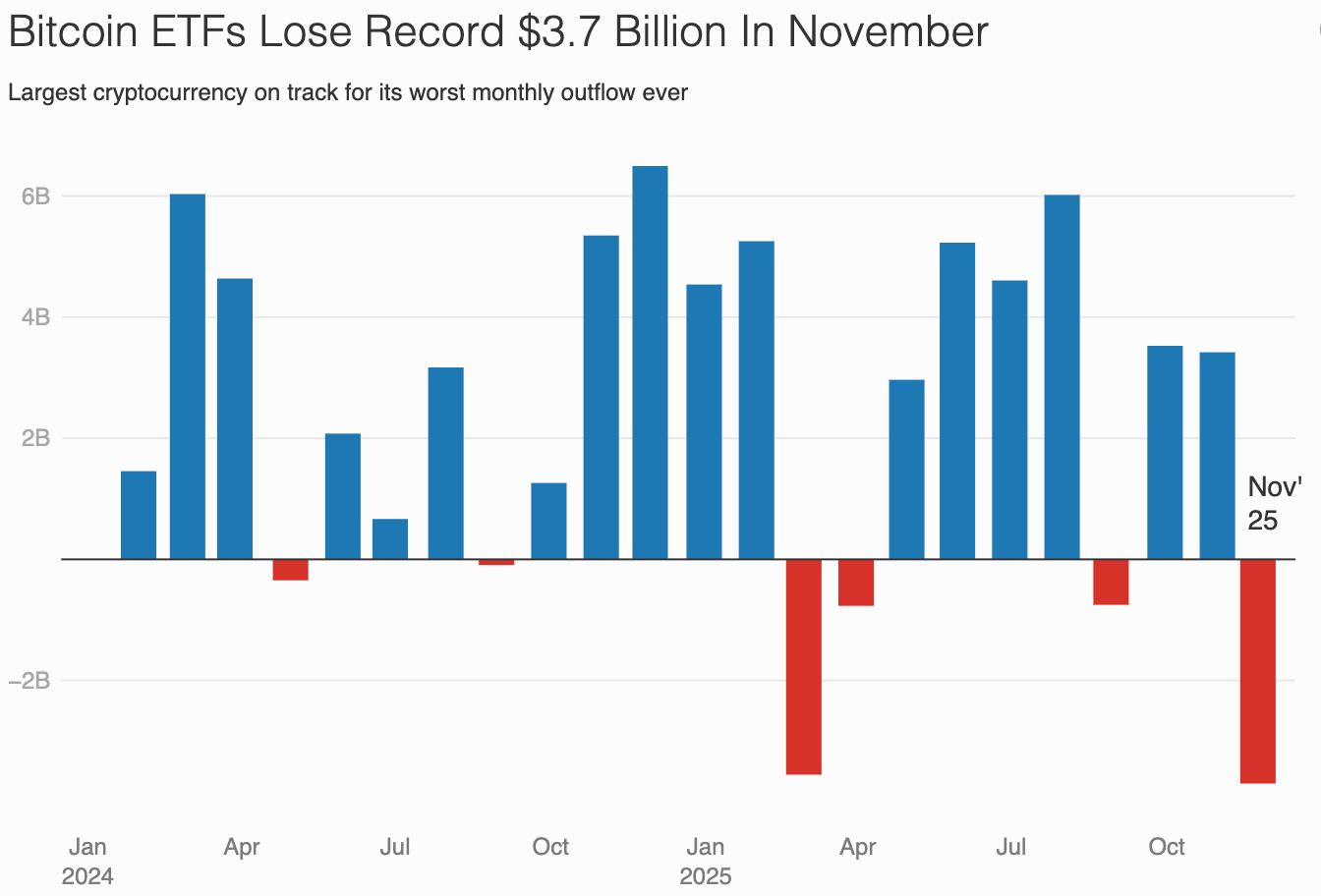
On November 26th, according to Forbes, the Bitcoin spot ETF continued the trend of large-scale redemptions, with a cumulative net outflow of $3.70 billion in a single month, refreshing the record of February this year. As a result, Bitcoin has fallen more than 35% since its historical high of 126,000 in October, hitting a low of $80,000 during the period, the lowest point since April.
Ethereum-related ETFs also saw more than 1.60 billion outflows during the same period, coupled with market panic, causing the total market value of global encrypted assets to fall below 3 trillion dollars.
Related images
3. Whale funds have significantly flowed into the exchange, and potential selling pressure has not yet been lifted
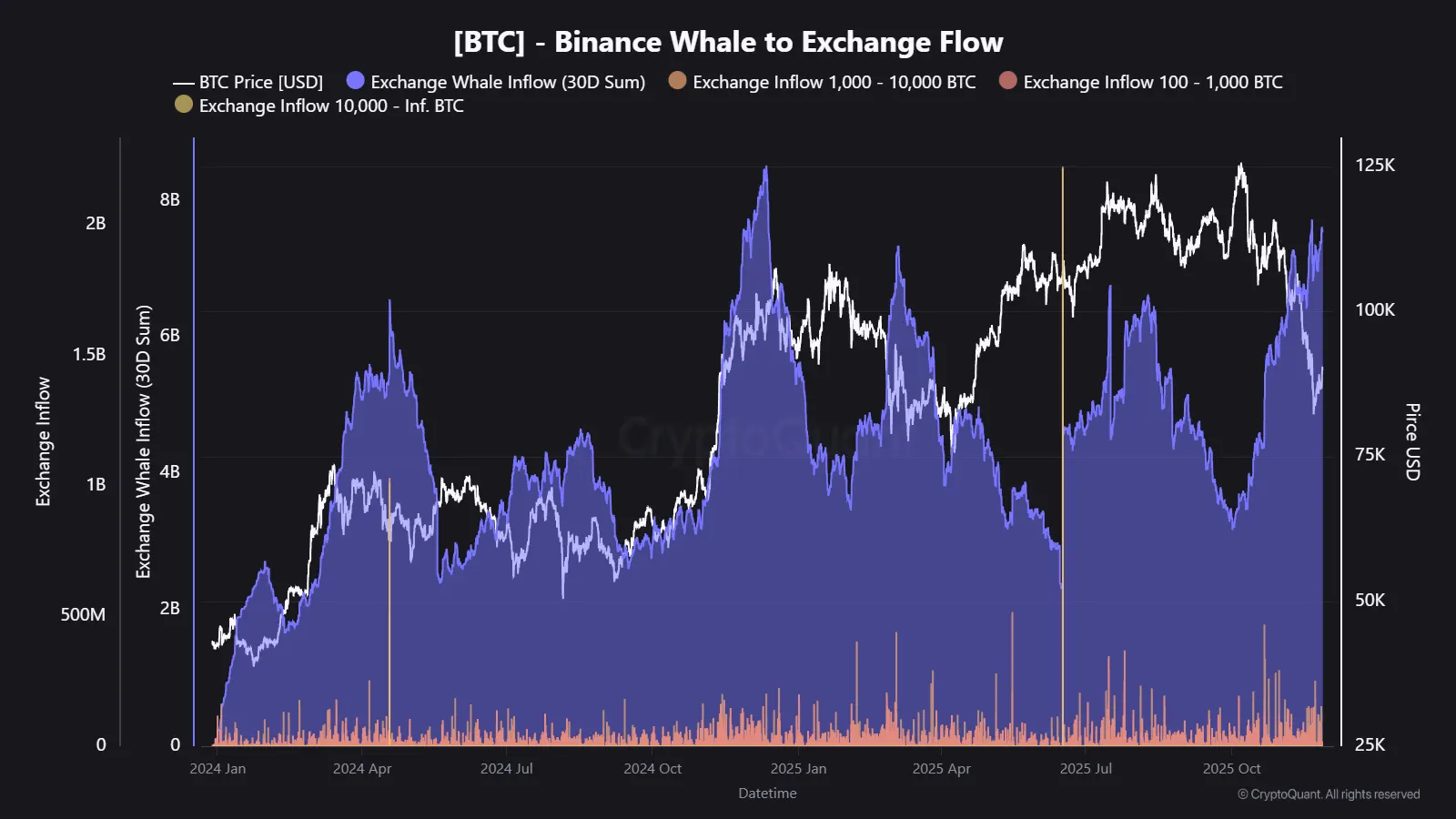
CryptoQuant data shows that in the past 30 days, the amount of BTC whale funds flowing into Binance has reached a new high of $7.50 billion, which is a one-year high. This fund inflow structure is highly consistent with past high volatility, which usually means:
•Whales transfer assets to trading centers during market weakness, taking profits or risk hedging.
•The current 30-day indicator is still on the rise, and there is no sign of stabilizing selling pressure yet.
Historical experience shows that in similar situations, the market often takes about one month to form a phase bottom.
Related images
4. Stablecoin reserves reach a historic high, and safe-haven funds continue to enter the market
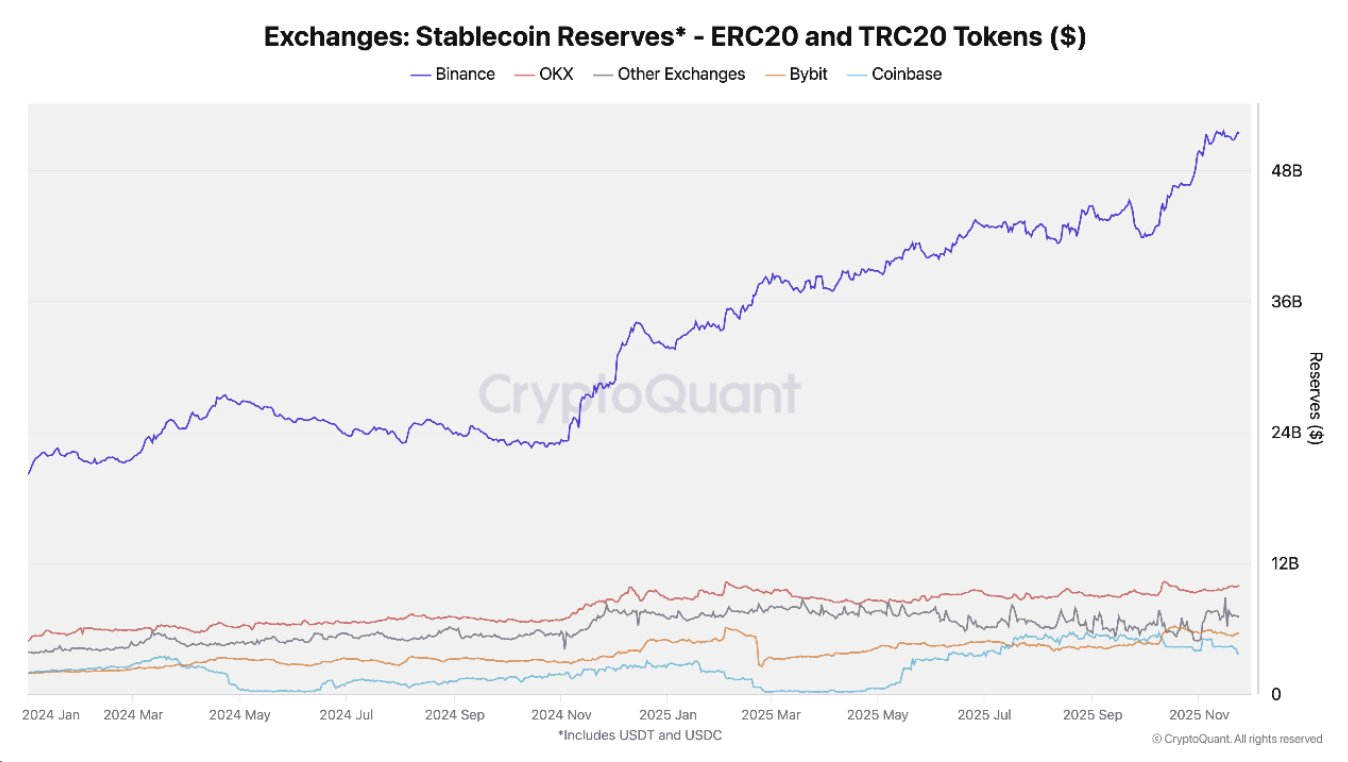
With the rapid market correction, the overall capital inflow of the exchange has significantly increased. The stablecoin reserve of Binance platform rose to $51.10 billion this week, reaching a new high, indicating the strengthening of market risk aversion. At the same time, the total capital inflow of Bitcoin and Ethereum is about $40 billion, among which Binance and Coinbase have the most active inflows, reflecting the concentration of short-term liquidity towards top institutional platforms.
Related images
5. The options market 's upper limit and downside risk have not been washed away
The most important expiration date of this year is approaching, and its influence is constantly expanding as the options market expands. Large clusters of outstanding contracts and the hedging flows around them help shape which price levels attract liquidity. As the gamma index rises, the demand for hedging will also increase, and the gamma value usually reaches its highest near expiration and when spot trading approaches the exercise price of parity. This makes the end of December a period when volatility may significantly rebound.
The call-over price distribution shows that the concentration of put options is close to $84,000, and call options are growing around $100,000. The area between these attacks is relatively narrow, creating room for sharper movement within this range. Traders are shorting gamma on put options and bullish options, which means that the upward space in the coming weeks may still be limited, and Downside Risk has not been completely cleared. In short, the recent rebound may continue to struggle below key resistance levels.
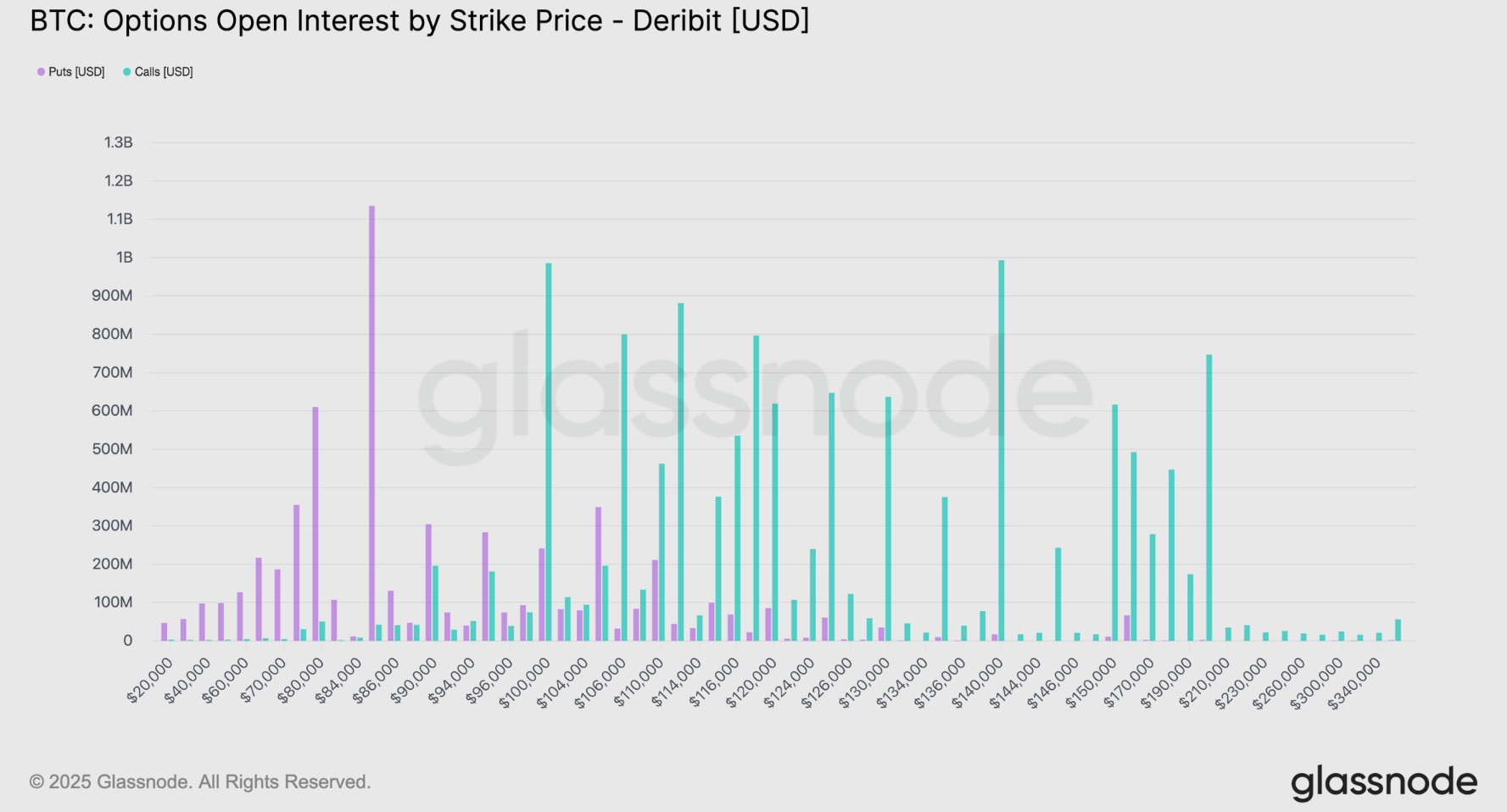
Bitcoin options no position squaring contract exercise price distribution
Technical indicator analysis
Relative Strength Index (RSI 14)
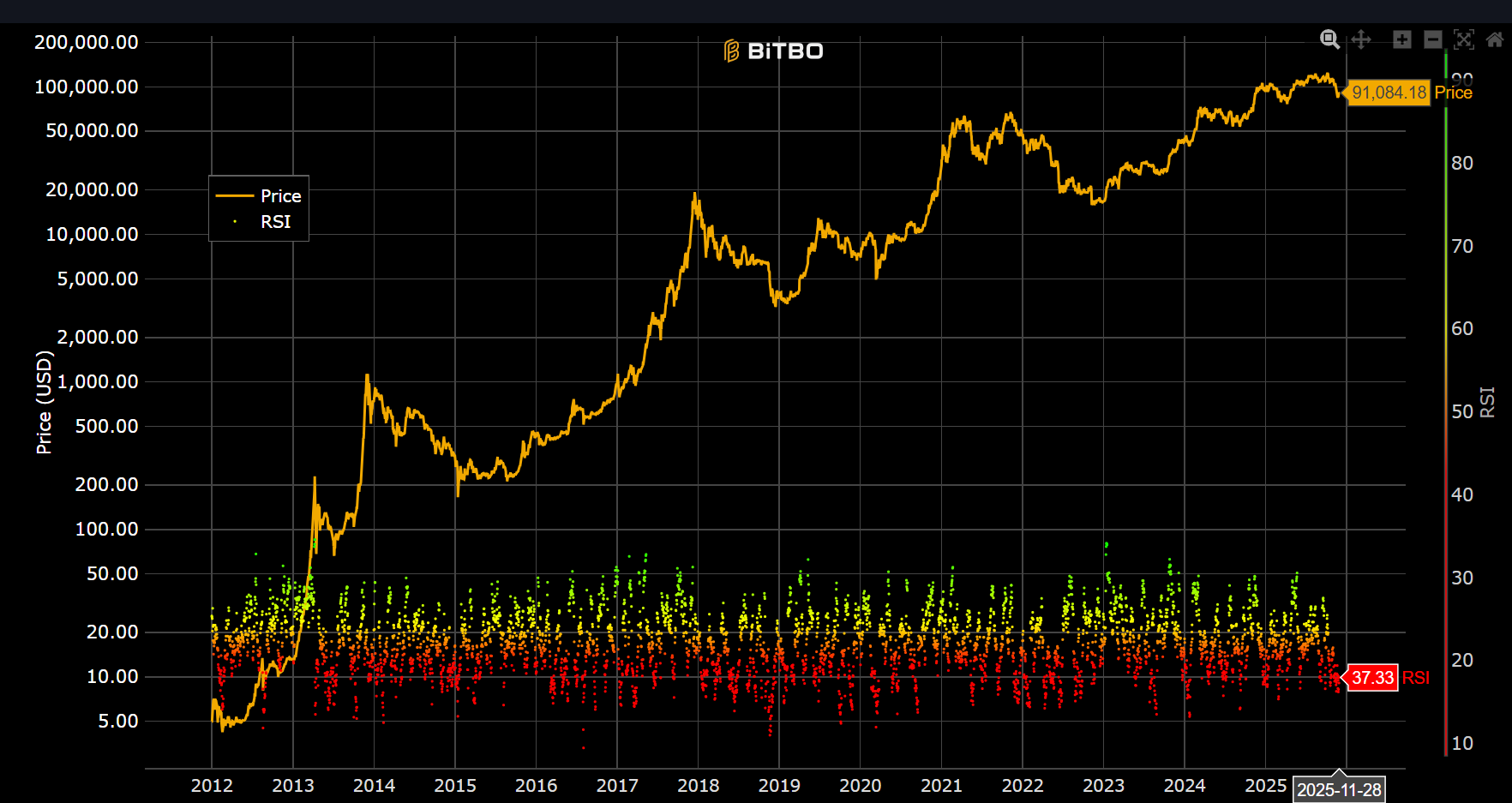
Bitcoin 14th Day RSI Data Picture
As of the end of this cycle, the 14-day RSI of Bitcoin was 37.33, which did not touch oversold (RSI < 30), slightly lower than last week's 40, but still in a significant weak range. The continued RSI in the 30-45 range indicates that the market is still weak, and the short-term oversold pressure has been released, but the rebound momentum is temporarily insufficient.
2 Moving Average (MA) Analysis

MA5, MA20, MA50, MA100, M200 data picture
The latest moving average data shows:
•MA5 (5-day moving average): $88,804
•MA20 (20-day moving average): $97,198
•MA50 (50-day moving average): $108,357
•MA100 (100-day moving average): $113,578
•Current price: Approximately $91,325
Overall, Bitcoin is currently running below all moving averages except MA5, and the structural bearish pattern has not been disrupted, with only short-term repair. Unless the price can re-stabilize above MA20 and MA50 and receive sustained trading volume support, it is difficult to form an effective reversal.
3. Key support and resistance levels
Support level: $90,000, while still cautiously observing the previous resistance level of $86,000.
Resistance level: $92,000 is the main pressure area for recent price increases
Market sentiment analysis
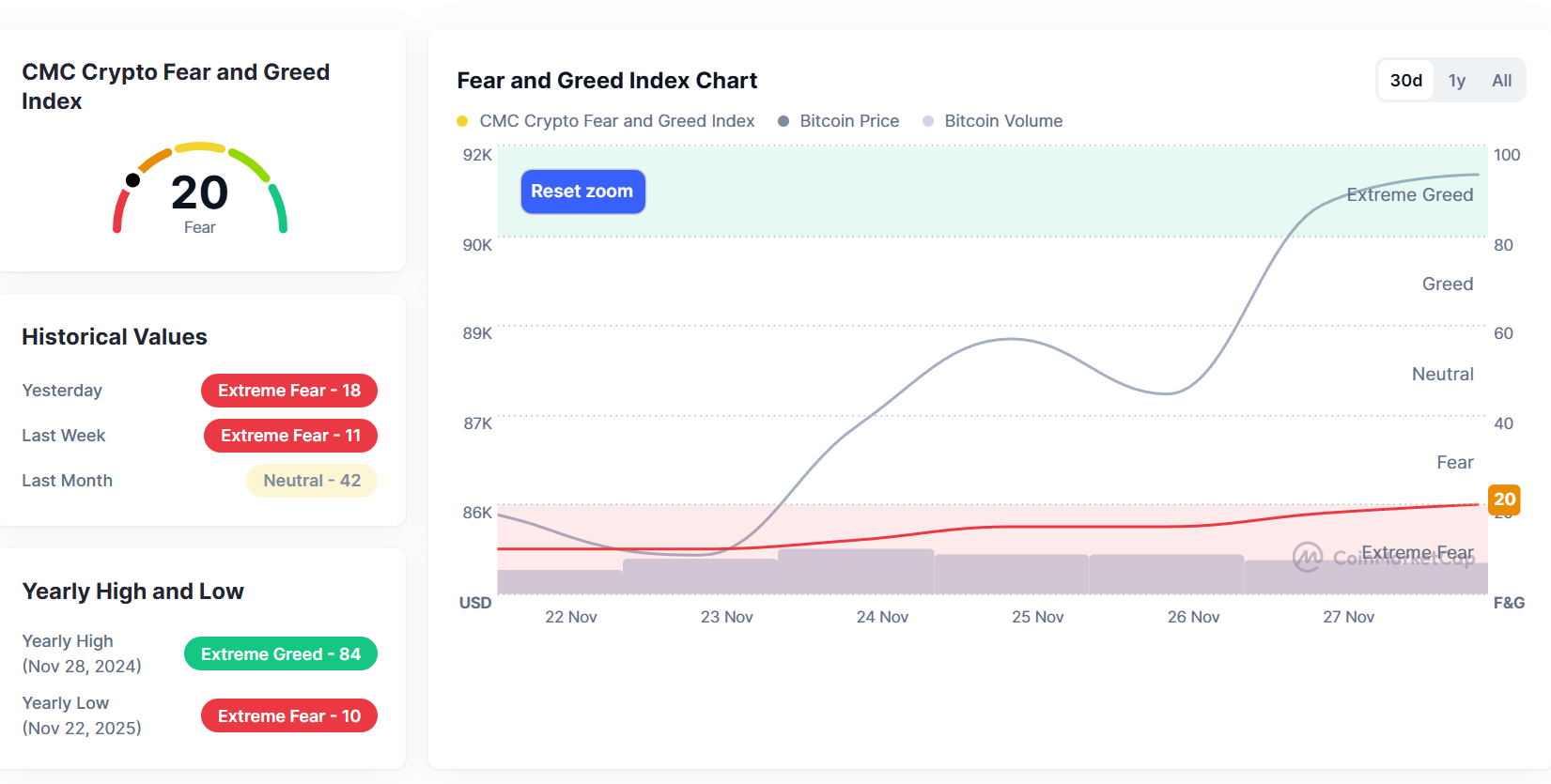
Fear and Greed Index Data Image
As of November 28th, the "Fear and Greed Index" is about 20 points, in the "extreme fear" range.
Looking back at this week (November 22nd to November 28th), the fear and greed indices were 10 (extreme fear), 10 (extreme fear), 12 (extreme fear), 15 (extreme fear), 15 (extreme fear), 18 (extreme fear), and 20 (extreme fear), respectively. The overall range is running between 20-10 points, continuously in the "extreme fear" area.
The index rebounded slightly from the lowest point of 10 this year to 20, and the market sentiment rebounded slightly with Bitcoin climbing over $90,000. However, the overall situation is still in an extremely panicked range, indicating that investor confidence is still extremely fragile. According to historical experience, this kind of "continuous low-level hovering for several days" sentiment often appears in the stage bottom area, but it may also last for several weeks or even months. It needs to be judged in conjunction with fund flow and fundamentals.
Macroeconomic background
1. US officials say the US will take new action against Venezuela, and the geopolitical "Black Swan" alert is facing price increases
On November 24th, US officials announced that the US will take new action against Venezuela. Once the situation escalates, crude oil prices will face supply-side shocks and soar, directly pushing up global inflation. The rapid rise in oil prices not only directly impacts global inflation rates, but also may disrupt the Fed's interest rate policy expectations, making the originally expected rate cuts or cycle peak plans fall through. Macro investors generally believe that this will prompt funds to flock to gold to hedging risks.
What's more noteworthy is that this uncertainty also strengthens the narrative of Bitcoin as "digital gold" and the ultimate decentralized safe-haven asset. When the traditional financial system is facing the dual impact of oil price inflation and geopolitics, institutions and high net worth individuals may accelerate the transfer of some funds to major virtual currencies such as $BTC $, seeking hedging tools outside the US dollar system.
Related pictures
2. The expectation of a rate cut by the Federal Reserve in December has risen violently
On November 24th, Barclays Research pointed out that there is still uncertainty about the Fed's interest rate decision next month, but Chairperson Powell is likely to push the FOMC to make a decision to cut interest rates. According to recent speeches, Barclays believes that Governor Milan, Bowman, and Waller may support interest rate cuts, while regional Fed presidents Musallum and Schmid tend to maintain interest rates unchanged. The latest statements from Governor Barr and Jefferson, as well as Goolsby and Collins, show that their attitude is not yet clear, but they are more inclined to maintain the status quo. Governor Cook and Williams rely on data, but seem to be more supportive of interest rate cuts. The Fed's interest rate cut expectations are hit by multiple factors, coupled with the weakness of non-US currencies such as the yen, and the US dollar index has risen above 100.3. On Friday, Williams' dovish speech at the Federal Reserve reignited expectations of a rate cut in December, and the yen reversed its decline after the Japanese authorities talked about the possibility of exchange rate intervention. The US dollar index closed the week at 100.18, up 0.87%.
Barclays said, 'This means that before considering Powell's position, there may be six voters who favor keeping interest rates unchanged and five who favor cutting rates.' Powell will ultimately dominate this decision because the threshold for governors to publicly oppose his position is high.
3. Hassett becomes the top candidate to take over the Federal Reserve, and the Federal Reserve may usher in a historic turning point
On November 26th, as the selection of the new chairperson of the Federal Reserve enters the final weeks, Kevin Hassett, director of the National Economic Council, has become the top candidate to take over the Fed in the eyes of the White House advisory group and Trump allies.
If Hassett is appointed, Trump will install a close ally he knows and trusts in the independent central bank, according to people familiar with the matter who requested anonymity. Some people pointed out that Hassett is seen as someone who can bring Trump's interest rate cutting ideas into the Fed, an institution that Trump has long been eager to influence, and is facing a historic turning point.
However, they also reminded that Trump is known for his unexpected personnel decisions, and everything is uncertain before the formal nomination is announced. White House press secretary Karoline Leavitt said in a statement: "No one can predict President Trump's decisions until he takes action." Fox News White House correspondent Edward Lawrence also stated that there is currently no frontrunner for the selection of the next Fed chairperson.
A senior US official confirmed that the final list of candidates has not yet been sent to the White House. The chairperson and governors of the Federal Reserve have always been the most direct way for the president to influence the central bank. Trump nominated the current chairperson Jerome Powell during his first term, and when the latter failed to push through the expected pace of interest rate cuts, the president deeply regretted his decision. Hassett is highly in tune with Trump in the field of economic policy, and both sides believe that further interest rate cuts are necessary.
4. US extends some tariff exemptions on China until November 10, 2026
On November 27th, the US Trade Representative's office announced that it will extend the exemption from tariffs established under the Section 301 investigation on Chinese technology transfer and intellectual property issues until November 10th, 2026. The existing exemption clause was originally scheduled to expire on November 29th this year.
From the perspective of the encryption industry, the decision of the US to extend the tariff exemption period for China is essentially a game of rule certainty and policy continuity. The encryption market is extremely sensitive to global macro policy changes, and the adjustment of tariff policies directly reflects subtle changes in geopolitical relations, which will be transmitted to asset liquidity, market sentiment, and even cross-border capital flows. The extension of the exemption period means the easing of trade frictions in the short term, which usually benefits risk assets, including cryptocurrency.
5. The US cancels the release of October CPI inflation data and the PCE will also be rescheduled
On November 27th, the US Bureau of Labor Statistics announced on its website that it has canceled the release of the Consumer Price Index (CPI) for October, which was originally scheduled for November 7th, due to the inability to retrospectively collect some survey data during the US government shutdown. The authorities stated that the November CPI, originally scheduled for December 10th, will be postponed to December 18th, along with non-farm employment data, which will be released after the Fed's interest rate meeting next month. The US Department of Commerce's Bureau of Economic Analysis also stated that it will reschedule the release of another key inflation indicator, the Personal Consumption Expenditures Price Index (PCE), but did not announce a new date. PCE was originally scheduled to be released on November 26th and is the Fed's preferred inflation measure.

Related pictures
3. Mining trends
Hash rate change
Over the past seven days, the overall hash rate of the Bitcoin network has steadily increased. This week, the hash rate has remained in the range of 877.41 EH/s to 1275.60 EH/s, which is relatively high.
From the trend perspective, the total network computing power of Bitcoin has always maintained a high range around 1 ZH/s, and the overall structure remains strong. Although there are frequent fluctuations in the short cycle, they are all high-level oscillations and have not shown a trend decline, indicating that the computing power base is still stable. The main changes this week are still significantly linked to the Bitcoin price. On November 25th, when BTC experienced a phased pullback, the computing power also experienced a sudden decline, reaching a low of about 877 EH/s. Subsequently, with the rapid recovery of prices, computing power also rebounded rapidly and approached the stage high of 1.15 ZH/s on November 27-28, reflecting the speed of computing power recovery and resilience in the high-cost environment of the mining industry.
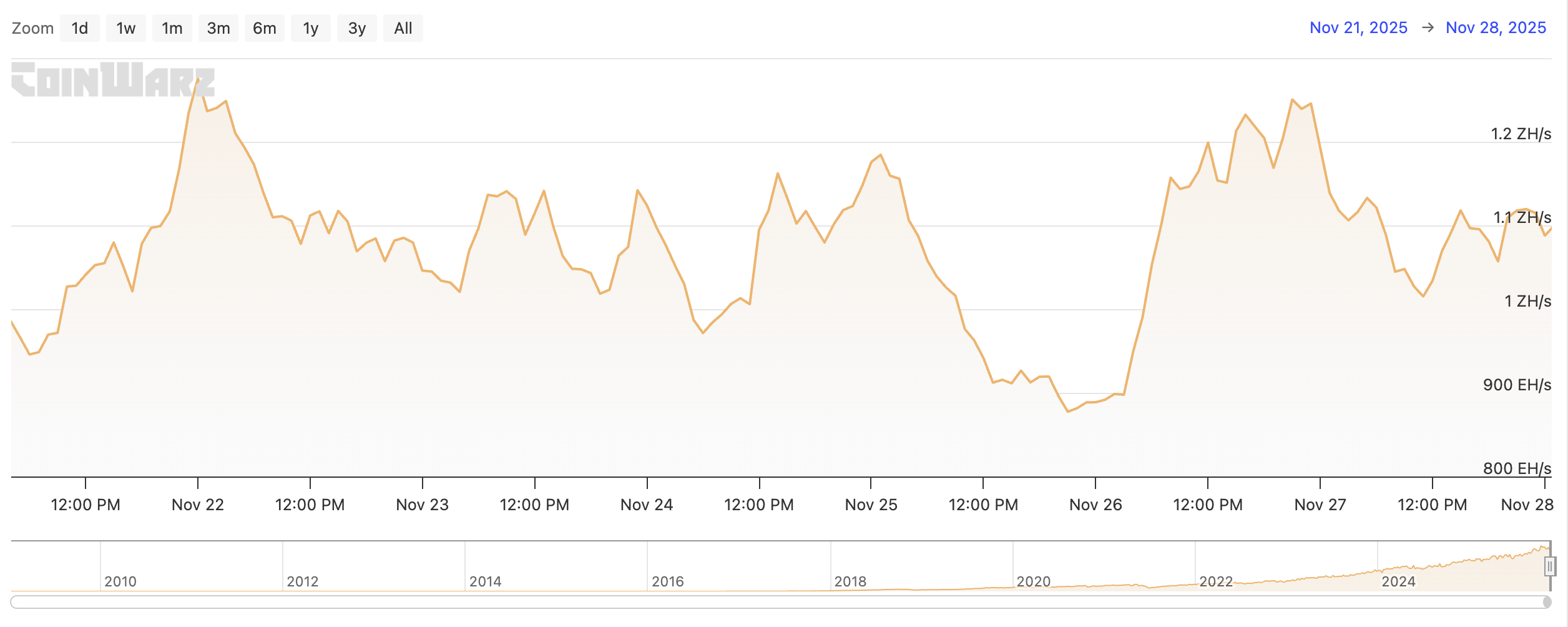
Weekly Bitcoin network hash rate data
As of November 28th, the total network computing power has reached 1.09ZH/s, and the mining difficulty is 149.30T. It is expected that the next difficulty adjustment will take place on December 10th, with an estimated decrease of 0.24%, and the adjusted difficulty will be about 148.94T.

Bitcoin mining difficulty data
Bitcoin hash price index
From the perspective of Hashprice per unit of computing power, the Hashrate Index data shows that as of November 28, 2025, the Hashprice is $38.56/PH/s/day. This week, the trend of Hashprice and Bitcoin price is basically consistent, showing a trend of falling behind and rising sharply to a high level.
•November 27th: This week's high is $38.85/PH/s/day
•November 21: This week's low is $34.20/PH/s/day
The core driving force of Hashprice still comes from the price of Bitcoin and the demand for on-chain transactions. The recent pullback of BTC price combined with the cooling of on-chain activities has repeatedly made the rebound of miner profits weak. At the same time, the continuous increase in the computing power of the entire network has further compressed the profit space per unit of computing power. However, the rapid rise over the weekend was significantly stronger than the weekly level, indicating that it still has some resilience in the high volatility.
Based on the latest industry data, the mining economy as a whole is entering a more tense stage. At the same time, the recovery period of mining machines has been extended to more than 1,200 days, and financing costs continue to rise, forcing mining companies to accelerate their transformation towards AI and high-performance computing (HPC). However, the current related revenue is not enough to make up for the decline in mining revenue. Despite the pressure on the mining end, Capital Markets sentiment has improved in stages. Overall, miner profits are still under pressure in the short term, and the mining ecosystem is gradually entering a stage that emphasizes efficiency improvement, cost control, and business diversification. However, against the backdrop of new highs in computing power and institutional attention, the industry still shows certain risk resistance and structural growth opportunities.
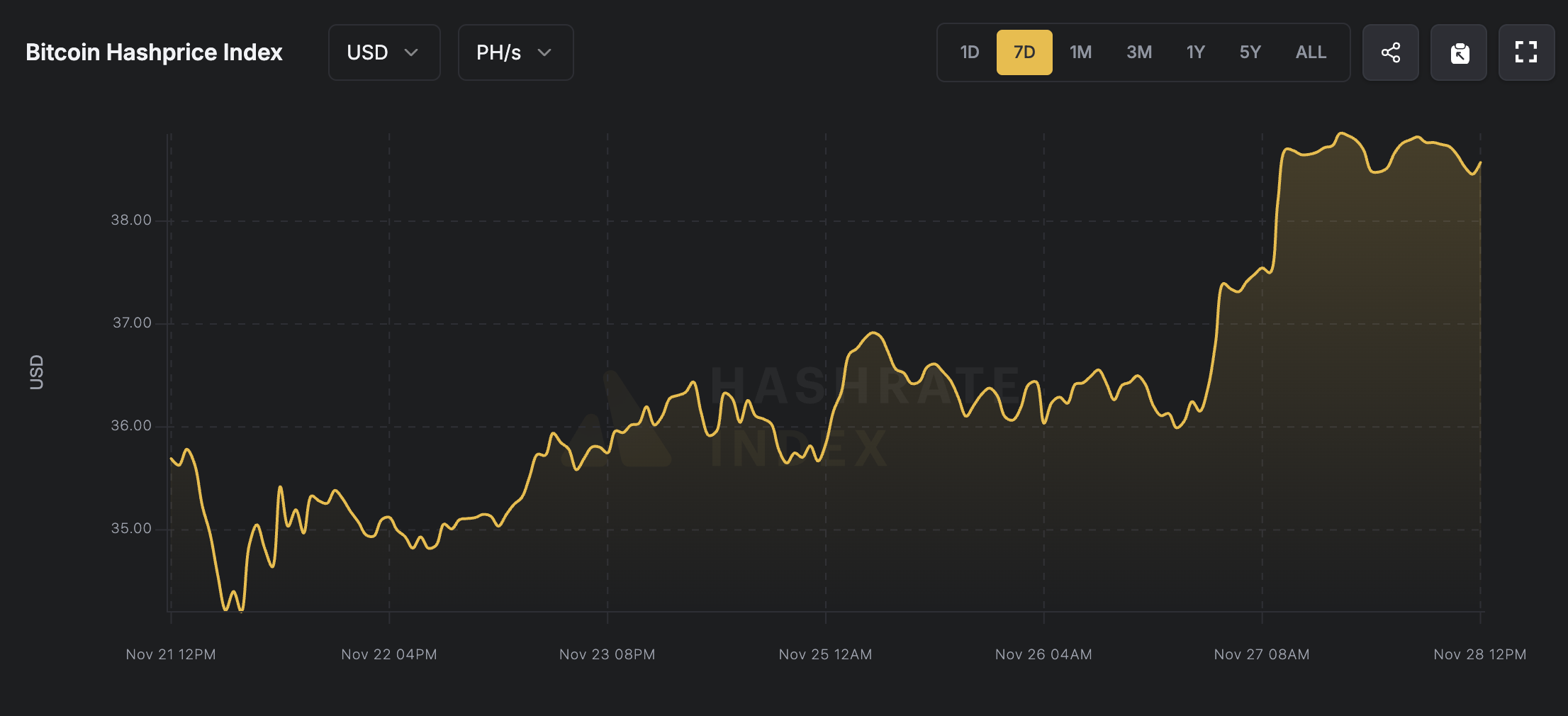
Hashprice data
4. Policy and regulatory news
Trinidad and Tobago passes crypto regulation bill to prepare for FATF assessment
On November 24th, according to Crowdfund Insider, the Parliament of Trinidad and Tobago passed the Virtual Assets and Virtual Asset Service Providers Act by a vote of 25 to 11, establishing a regulatory framework for cryptocurrency activities in the Caribbean country.
The bill aims to meet the Anti Money Laundering and Counter Terrorism Financing standards of the Caribbean Financial Action Task Force (FATF) in order to cope with the FATF on-site assessment scheduled for March 2026. Confusion arose before the bill was passed, with opposition parties accusing the government of violating parliamentary procedures by submitting a 48-page document containing over 200 amendments just minutes before the debate began.
Critics are concerned that the bill is too strict and could hinder innovation, but the government insists that the amendments are based on extensive consultations with the central bank, securities regulatory agencies, and industry participants.
Bank of England proposes to relax stablecoin rules
On November 25th, the United Kingdom's central bank proposed new rules: stablecoin publishers are allowed to investup to 60%of their reserve assets in short-term government bonds, rather than 100% in the central bank as previously proposed.
This is a significant softening of its regulatory stance, intended to support the stablecoin regulatory mechanism launched in 2026.
At the same time, the Bank of England is considering providing liquidity support to systemic stablecoin publishers during times of market stress.

Related pictures
Global Banking Crypto Asset Rules Need to be Reviewed - Basel Committee Chair Proposes
On November 26th, Erik Thedéen, Chairperson of the Basel Committee on Banking Supervision, stated that the current capital requirements for banks holding cryptoassets such as stablecoins and Bitcoin are too strict and need to be re-evaluated.
He pointed out that with the rapid growth of the stablecoin market (currently worth hundreds of billions of dollars), a "different approach" is needed to address its risks.
The current rules, if strictly enforced, will discourage banks from participating in cryptocurrency businesses and may hinder the integration of cryptoassets such as stablecoins with the traditional financial system.
The Central Bank of the UAE has integrated crypto and blockchain into its traditional financial regulatory system
On November 27th, the UAE passed a new federal financial order, bringing services including cryptocurrency and blockchain activities under central bank regulation. This means that all cryptocurrency/blockchain-related services will be subject to the same regulation as traditional financial institutions.
As an important financial center in the Middle East, this step represents the region's transition from a "gray area" to a "formal and regulated financial system", which has a promoting effect on the legalization of global encrypted assets and institutional participation.
Related pictures
5. Bitcoin-related news
Global Enterprise and National Bitcoin Positions (This Week's Statistics) "related content, collected and organized
1. Bitwise CEO: Has increased Bitcoin holdings again at $85,000
On November 24th, Bitwise CEO Hunter Horsley posted on the X platform that he "couldn't resist" buying Bitcoin again at the price of $85,000 and felt good. He disclosed on Monday that he bought Bitcoin at the price of $89,000.
2. El Salvador has increased its holdings of 1,098.19 BTC in the past 7 days, with a total position of 7,478.37 BTC
On November 24th, El Salvador increased its holdings of 1,098.19 bitcoins in the past 7 days, and currently holds 7,478.37 bitcoins with a total value of $632 million.
OranjeBTC increased its holdings by 7.3 BTC, bringing its total holdings to 3720.3
On November 25th, Brazil Listed Company OranjeBTC announced an increase of 7.3 BTC at an average price of about 95,000 USD, with a total holding of 3,720.3 as of now, and a Bitcoin yield of 2.2% so far this year.
4. Japanese Listed Company Value Creation Increases 7.057 Bitcoins
On November 25th, Japan's Listed Company Value Creation Co. Ltd. (TSE code: 9238.T) announced that it used surplus funds to purchase 7.057 bitcoins, with a total value of about 100 million yen (about 670,000 dollars) and an average purchase price of 14.17 million yen per bitcoin.
5. Texas Crypto Reserve Takes Key Step, Allocates $5 million BlackRock Bitcoin Spot ETF
On November 26th, according to Coindesk, Texas has taken a key step in building a state-level cryptocurrency reserve. According to officials, the state has spent $5 million to purchase BlackRock's Bitcoin ETF, although the Texas strategic Bitcoin reserve plan is still in preparation.
The state has recently solicited industry opinions on a compliance plan to establish a bitcoin reserve and passed legislation earlier this year to allocate $10 million. After completing the final steps, Texas is expected to become the first state government in the US to seriously start long-term cryptocurrency investment. A spokesperson for the state auditor general's office confirmed on Tuesday that as a transitional measure before setting up a custody contract, $5 million has been allocated to the BlackRock iShares Bitcoin Trust.
6. DDC Enterprise increases holdings of 100 BTC, bringing total holdings to 1,183
On November 27th, according to BusinessWire, digital asset management company DDC Enterprise Limited announced that it has increased its holdings of 100 BTC, with an average purchase price of $106,952. Currently, its total holdings of Bitcoin have increased to 1,183, with a Bitcoin yield of 122% in the first half of this year.
7. South Korean Listed Company Bitplanet Launches Daily Bitcoin Increase Plan
On November 27th, according to Decrypt, South Korean Listed Company Bitplanet has launched its first daily Bitcoin increase plan as part of a broader effort to build a considerable fund reserve using the world's largest cryptocurrency. In addition, the company purchased 93 bitcoins last week.
8. Japanese company ANAP increases its holdings of 20 BTC, bringing its total holdings to 1,145.6951
On November 28th, Japanese fashion company ANAP announced an investment of $2.08 million to increase its holdings of 20.4422 bitcoins at a price of $101,906.6 per coin, bringing its total holdings to 1,145.6951.
9. Hong Kong company Prenetics increases its holdings of 7 BTC, bringing its total holdings to 501
Prenetics, a genetic testing and health technology company headquartered in Hong Kong, invested $620,000 to buy 7 bitcoins last week, bringing its total holdings to 501.0341.
10. Japanese company Convano increases its holdings of 97 BTC, bringing its total holdings to 762
On November 28th, Japanese nail salon operator and concession company Convano announced that the company invested $1.05 million and increased its holdings of 97.6775 bitcoins at a price of $107,888.2 per coin, bringing its total holdings to 762.6776.
Michael Saylor's post "Will not give in" implies that he will still increase his holdings of Bitcoin
On November 24th, Strategy founder Michael Saylor wrote "I won't give in", implying that he will continue to increase his holdings of Bitcoin.
Previously, the "HODL this week" poll initiated by Saylor ended: 77.8% were not sold.

Related pictures
An options trader is betting that Bitcoin will break through 100,000 before the new year, but it is not expected to reach a new high.
On November 25th, according to Coindesk, a trader opened a "bullish vulture" option with a nominal value of 20,000 bitcoins (1.76 billion USD) on Deribit on Monday. The net position established allows him to profit when the bitcoin price closes between 106,000 USD and 112,000 USD at the end of the year. This means that the trader expects the bitcoin price to continue to rebound before the end of the year, breaking through the 100,000 USD mark, but not reaching new highs.
According to reports, Bitcoin has rebounded from last week's low of nearly $80,000 to about $88,000. Although this rebound is mainly due to the market's expectation of a 25 basis point rate cut by the Federal Reserve in December
Bitcoin is listed as the most noteworthy "blue-chip crypto asset" with excellent risk/return ratio.
On November 26th, according to Cryptonews, among the cryptocurrencies worth buying, Bitcoin and Ethereum are the more mature choices, while Solana and Binance are the riskier ones. For investors seeking practicality or artificial intelligence investment, Bittensor and Hyperliquid stand out because they connect blockchain with real-world applications and high trading volume.
Strong bullish factors are expected in Q4 2025: Bitcoin's historical average increase in Q4 was 79%, with over $18 billion of funds flowing into US spot Bitcoin and Ethereum ETFs. By 2029, the market value of tokenized real-world assets may reach about $5.25 trillion.
Analyst: The Bitcoin sell-off is approaching saturation, and now may be a relatively strong buying opportunity
On November 27th, according to The Block, Vetle Lunde, head of research at K33, stated in a new report that in the past month, Bitcoin has underperformed the Nasdaq index on 70% of trading days. Currently, Bitcoin's trend relative to the index is 30% weaker than on October 8th. The recent Bitcoin sell-off has approached saturation, and the signal of panic selling in Spot Market and ETP trading flow also confirms this.
Bitcoin's severe underperformance relative to stocks has become seriously disconnected from fundamentals, providing a strong long-term relative buying opportunity.
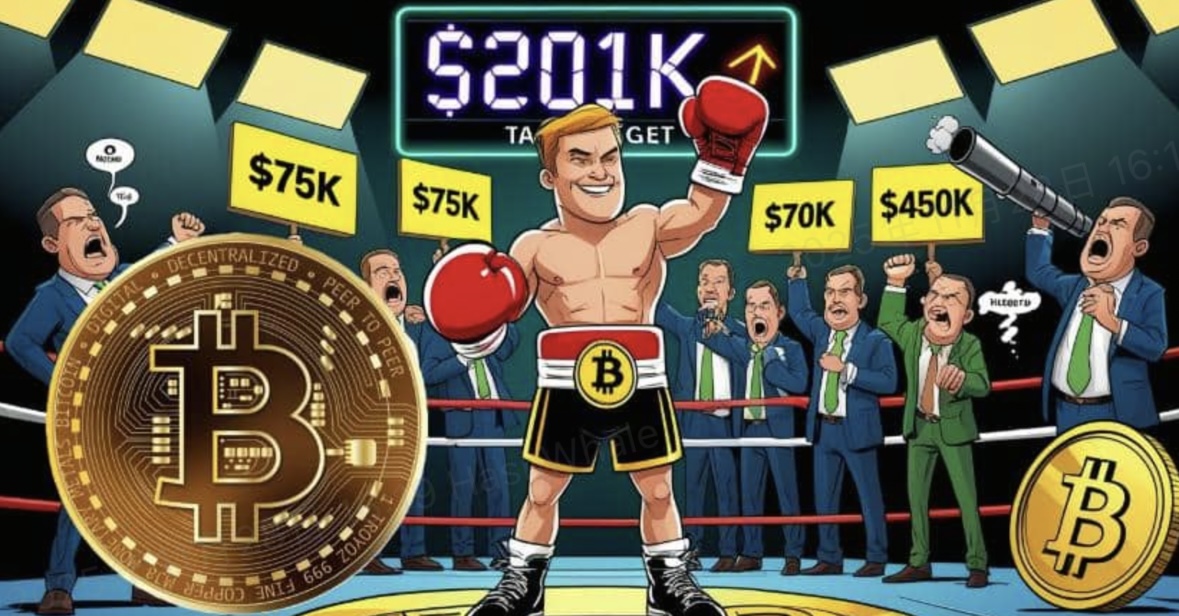
Analyst: Bitcoin's median price after halving may reach $201,000
On November 28th, according to BraveNewCoin, multiple crypto/financial analysts have summarized their views. After this round of halving cycle, the median price of Bitcoin may reach $201,000, reflecting the market's optimistic expectations for the long-term trend. Why halving is so important: historic boost and subsequent resistance. Historical returns after halving: Bitcoin halving - that is, reducing the new supply of Bitcoin obtained by miners - has often indicated a significant increase in price in history. For example, after the Bitcoin halving in 2012, driven by widespread adoption and media attention, Bitcoin soared by more than 8,000% within a year. The halving in 2016 led to a slow rise in prices, but ultimately reached its peak in the bull market cycle of 2017, with prices rising about 30 times from the halving day to the peak. After the Bitcoin halving in 2020, driven by macroeconomic benefits and stimulus policies, Bitcoin rose by about 567% in the first year. Supply-side constraints, coupled with demand, can generate excess returns.
Related pictures
Bitcoin (BTC) Price Forecast: After Breaking Through Support, Bitcoin Target Price 1.20 million USD, Fed Rate Cut Pushes Price Up
On November 28th, according to BraveNewCoin, X technical analysis showed that Bitcoin broke through $117,000 after two backtests of $116,000. This bullish signal is consistent with a study published in the Journal of Risk and Financial Management in 2023, which found that such backtests usually indicate further gains. This breakthrough has sparked market optimism, and traders are currently focusing on $120,000 as the next short-term target.
"Bitcoin whale/large wallet" recently accumulated BTC again
On November 28th, on-chain data/market analysis pointed out that institutions and large investors have started to "load coins" again after the last correction, indicating that they may believe that the current price is a good opportunity to buy on dips.


