
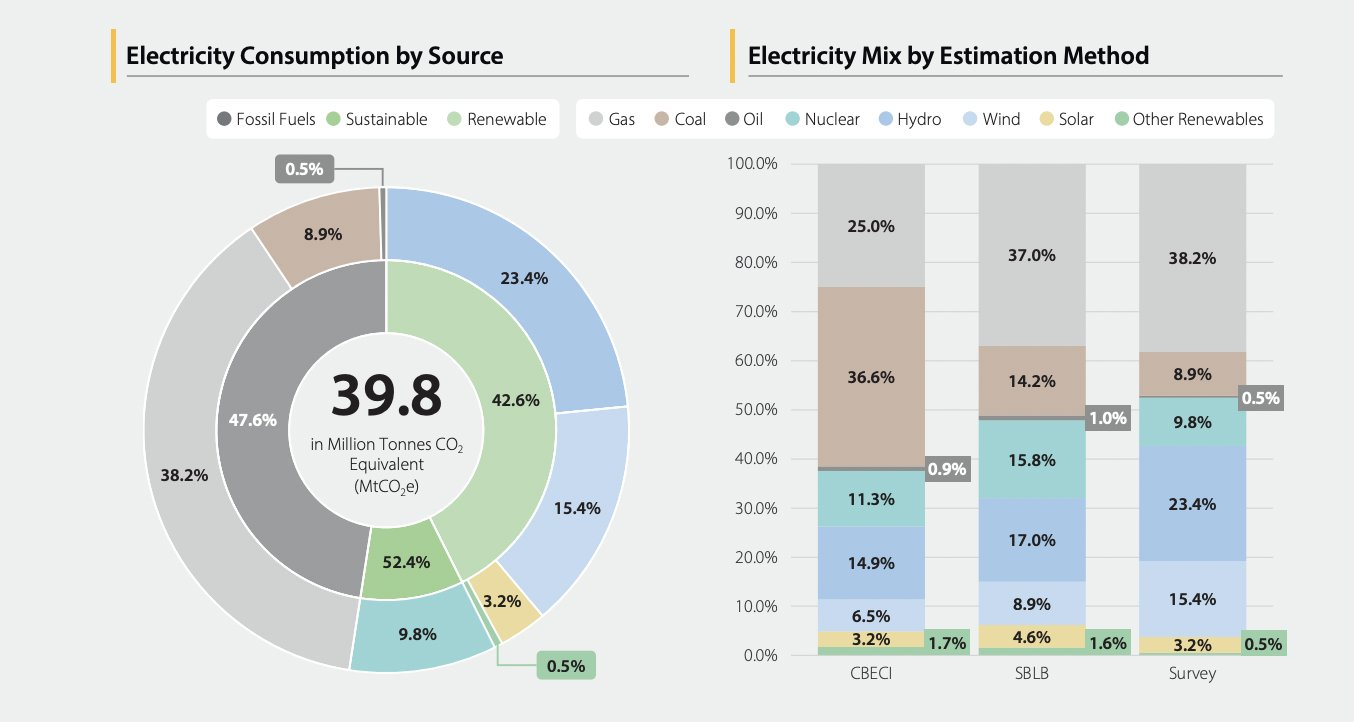
The Cambridge Centre for Alternative Finance (CCAF) has released its latest Bitcoin Mining Sustainability Report, featuring a key new finding: 52.4% of the Bitcoin network’s hash rate now comes from “zero-emission” energy sources. In the previous edition of the report, this figure was just 37%. In other words, Bitcoin mining's transition to cleaner energy is progressing far faster than many expected.
Today, the Bitcoin network has:
- Over half of its hash rate powered by zero-carbon energy
- Lower carbon intensity than many traditional industries
- A device recycling rate of over 86%
- Methane mitigation measures making a measurable impact
The following is a summary of the report’s key insights by @DSBatten
Read the full report here:
Cambridge Digital Mining Industry Report (April 2025)
Note: For the first time, the Cambridge team conducted in-depth research on 49 real-world Bitcoin mining companies, rather than relying on outdated modeling assumptions. This significantly enhances the report's credibility and gives us a far clearer picture of how Bitcoin mining actually uses energy.
1. 26% of Bitcoin Mining Uses “Off-Grid” Power – Often Green Energy
A major new finding is that 26% of the global Bitcoin hash rate comes from “off-grid” sources—that is, not connected to mainstream electricity grids. These mining farms are typically located in regions with cheaper electricity and closer proximity to renewable energy, such as:
- Hydropower-rich mountain areas
- High plains with strong wind energy
- Geothermal hotspots
- Oil fields using excess flare gas for electricity
Earlier studies often assumed all mining relied on grid power, overlooking these off-grid miners. In fact, off-grid mining is often greener, relying on renewables or waste energy and reducing overall environmental impact.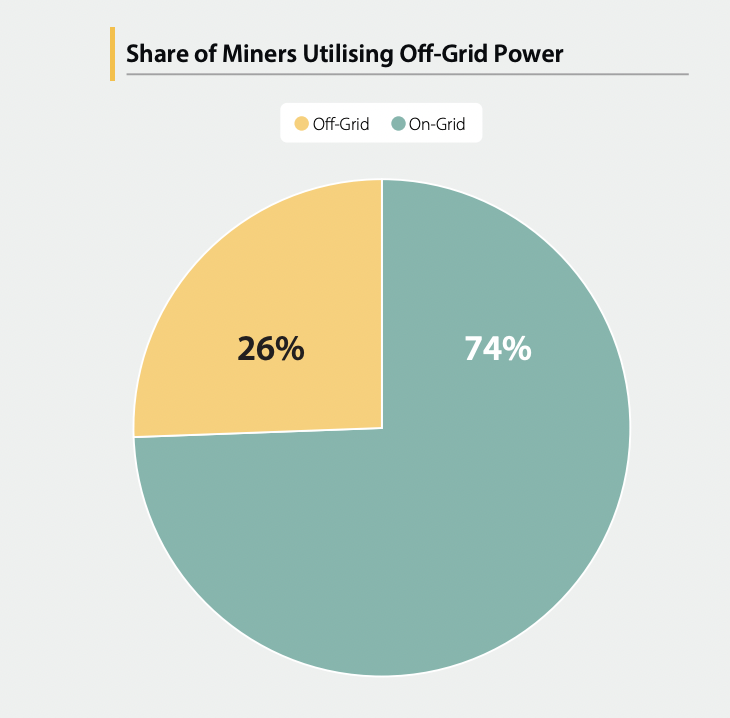
2. Carbon Intensity Has Dropped – Now Lower Than Many Industries
The report estimates that Bitcoin mining now emits 288.2g CO₂e per kWh—lower than many large traditional industries. This figure is very close to independent researcher Daniel Batten’s estimate of 266g CO₂e/kWh, adding to its credibility.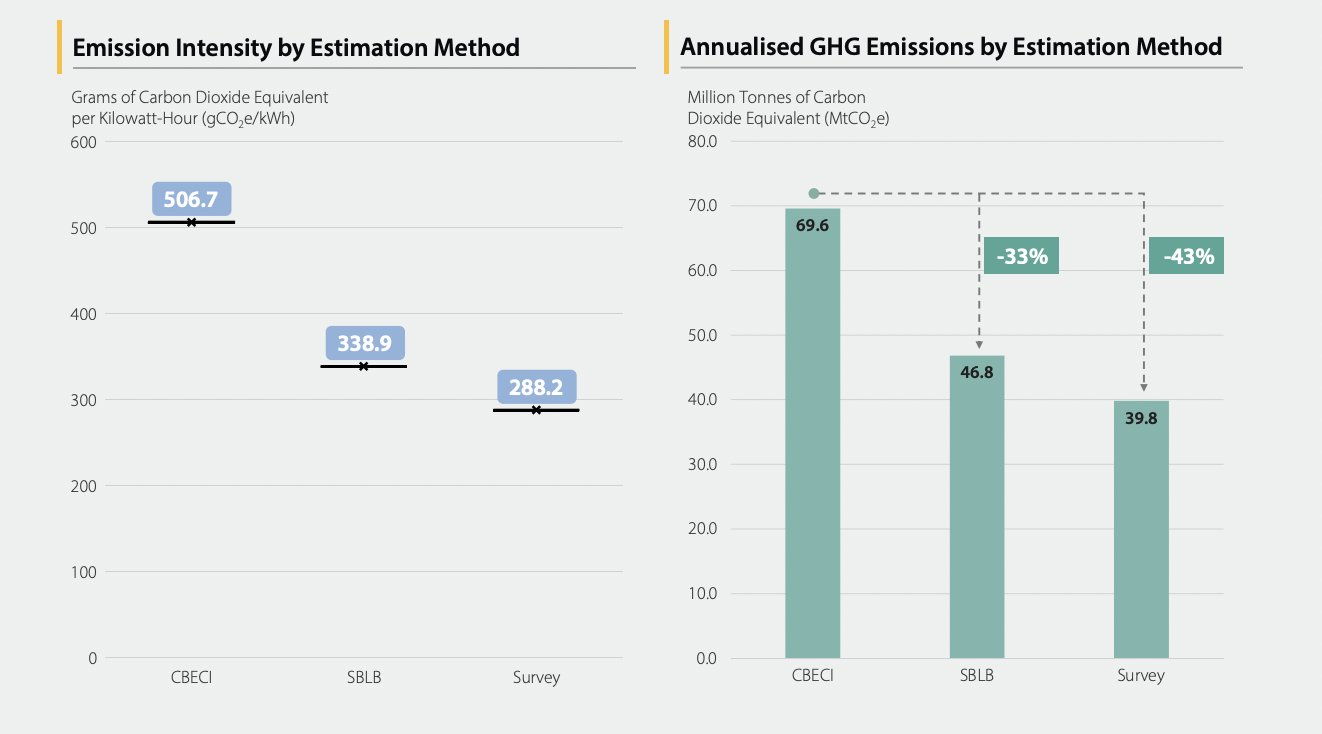
Even more notably, the total annual carbon emissions of the Bitcoin network is approximately 39.8 million tonnes of CO₂e, a figure much lower than many assume. This level has remained relatively flat over the past four years due to two key factors:
- Mining machines are becoming more energy efficient—more hash power per unit of electricity.
-
Miners are relocating to regions that offer cleaner energy sources.
3. Methane Mitigation Measures Are Working – 5.5% of Emissions Offset
Beyond the question of what kind of electricity miners use, the report notes an even more innovative development: using waste flare gas from oil fields to mine Bitcoin.
This approach turns gas that would otherwise be burned (or vented as methane) into electricity—both generating income and preventing methane emissions, a far more harmful greenhouse gas than CO₂.
When this “negative emissions” energy is factored in, the Bitcoin network’s net emissions drop to 37.6 million tonnes CO₂e, roughly 5.5% lower than gross estimates. This offset is now too significant to ignore.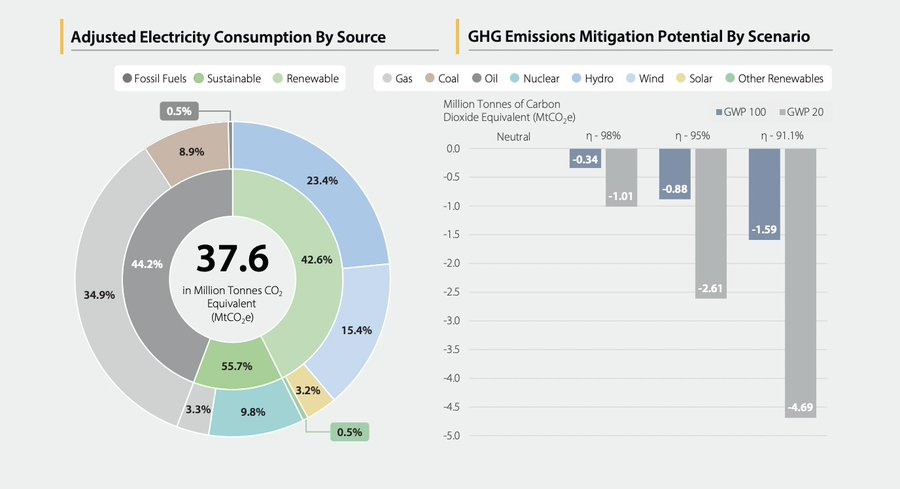
4. Mining Equipment Reuse Rate Hits 86.9% – Beating Industry Norms
There’s a common concern that frequent equipment upgrades in mining lead to excessive e-waste. However, the report provides reassuring data:
- 86.9% of mining equipment is reused, resold, or repurposed
- Only 3.2% of companies lack dedicated e-waste management systems
This indicates that the mining industry’s environmental awareness is much higher than commonly assumed, and that e-waste is being handled more responsibly than in many sectors.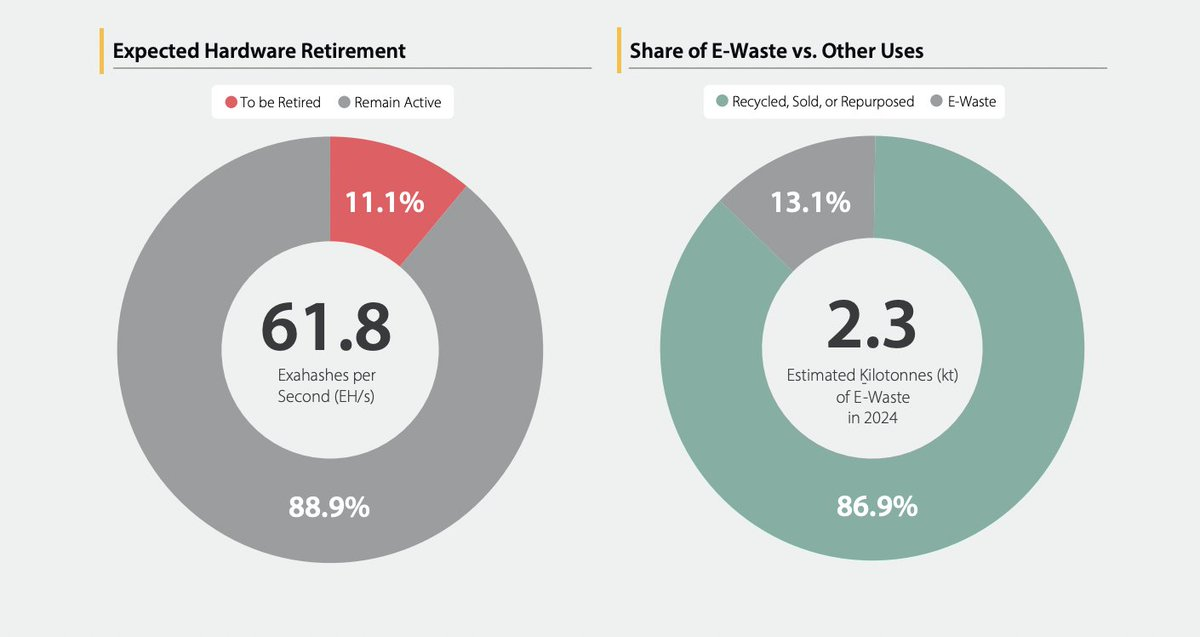
5. Mining Machines Are Becoming Much More Efficient
The Cambridge team emphasizes that many past criticisms of Bitcoin’s energy use fail to account for one key variable: machine efficiency.
From CPUs and GPUs to ASICs, each new generation of mining hardware has delivered significant improvements in energy efficiency. Just as early critics of the internet failed to anticipate Moore’s Law, today’s energy debates often ignore the rapid progress in mining tech.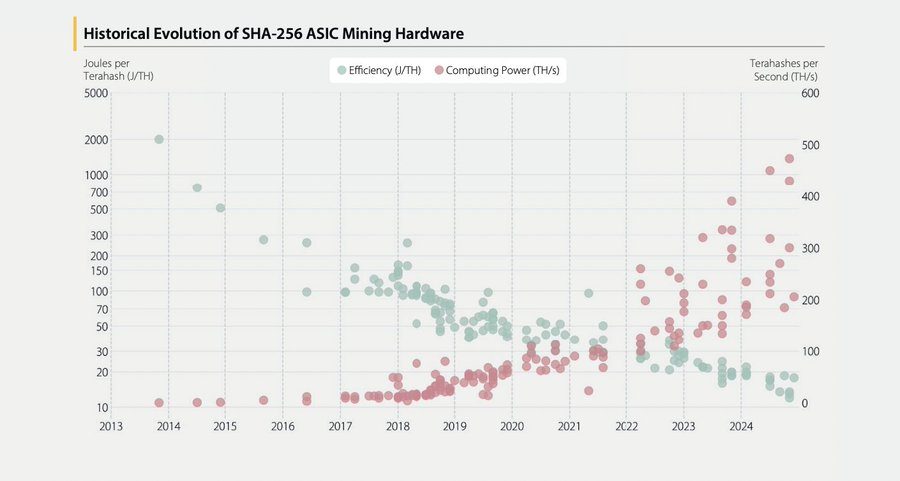
6. Bitcoin’s Use in Illicit Activity Is Declining – Not Growing
The report also addresses the myth that Bitcoin is increasingly used for illegal purposes. In fact, data shows:
- Illegal use peaked as a percentage in 2019
- Absolute volume peaked in 2022
- Both are now in steady decline
This reinforces the idea that Bitcoin’s negative reputation is due for a reality check. It breaks the outdated association of Bitcoin with fossil fuels and provides regulators, policymakers, and media with a fresh, evidence-based perspective.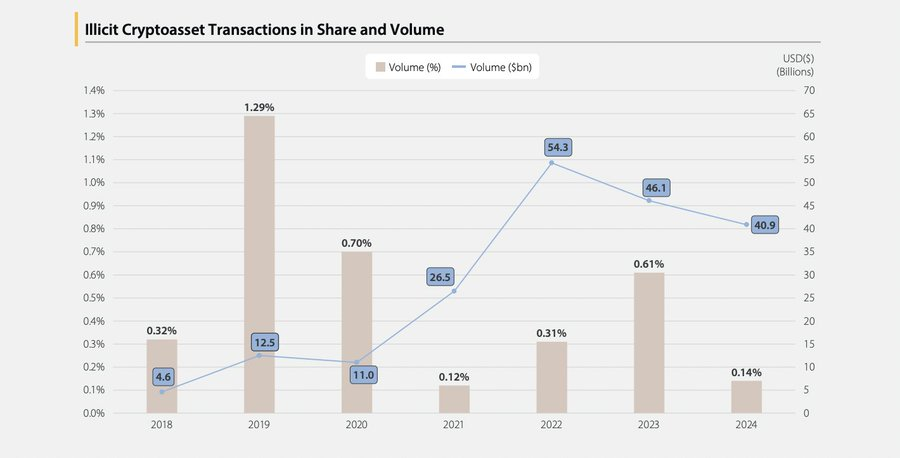
Conclusion
This groundbreaking report represents a powerful rebuttal to outdated narratives that associate Bitcoin with high emissions and irresponsible energy use.
Instead, the data shows a more sustainable, more efficient, and more forward-thinking industry, where innovation is helping mitigate environmental impact rather than worsen it.
Let’s stop debating the energy use of 2019—and start understanding the reality of 2025.


